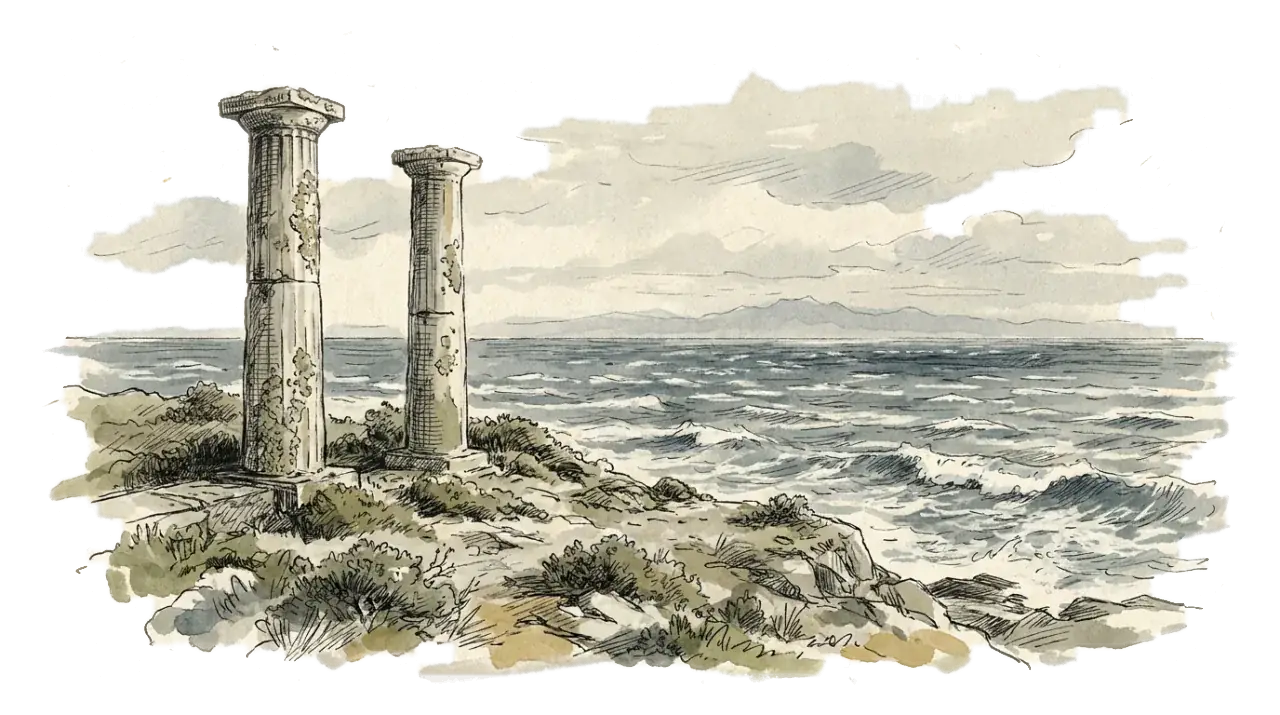
We tell you the legends, and we mark them as legends.
Every claim on every walk carries a mark and a source. A professor will read this, and the Government has to be able to defend it. Where they are still arguing, we say so.

Heard at the WWII tunnels, on Lord Airey's ridge
Six men volunteered to be bricked in alive.
In 1941, if Gibraltar fell, Operation Tracer was to seal a leader, two doctors and three wireless operators inside a chamber cut into the Rock: with stores for seven years and two observation slits two centimetres wide to watch German shipping through. Ian Fleming was in the planning. It was never activated, and the entrance was lost until cavers found it again in December 1996.
Established
Sourced and not seriously disputed. If a specialist reads this, they will recognise it.

Heard at the Skywalk, with the water underneath you
The Mediterranean dried out, and refilled through the gap below.
Between roughly 5.96 and 5.33 million years ago the Strait closed and the entire Mediterranean evaporated into a salt desert hundreds of metres below the Atlantic. Then it opened. A 2009 study in Nature modelled up to 90% of the refill pouring through in under two years. That it happened is not in doubt; the two-year figure is a model, and other groups argue for far longer.
Still argued
Real evidence on more than one side. We have given you the version most researchers hold, and flagged that it is not settled.

Heard at St Michael's Cave, in the main chamber
The cave has no bottom, and a tunnel runs under the sea to Africa.
That is how the monkeys got here, the story goes. Victorian visitors believed it enough to lower men on ropes looking for the way through. The genetics say otherwise: every Gibraltar macaque haplotype also occurs in North Africa and there are no post-glacial fossils on the Rock, so people almost certainly carried them across. It is still worth telling.
Told, not proven
A story people tell about this place. Worth hearing, and not evidence of anything.
The three marks
On the walk the mark sits next to the claim, with its sources under it. Tapping the mark explains the scheme in place, so nobody has to have read this page.
- Established
- Sourced and not seriously disputed. If a specialist reads this, they will recognise it.
- Still argued
- Real evidence on more than one side. We have given you the version most researchers hold, and flagged that it is not settled.
- Told, not proven
- A story people tell about this place. Worth hearing, and not evidence of anything.
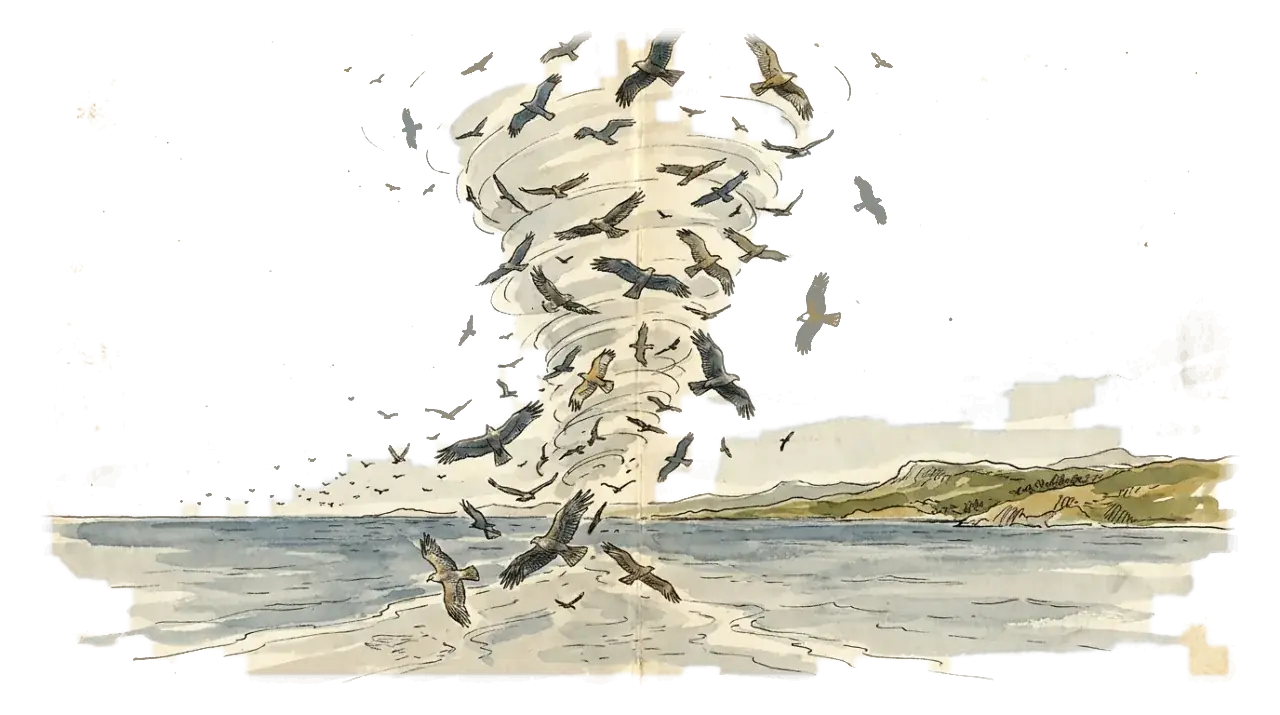
Checked by the people who look after this rock.
GONHS
Gibraltar Ornithological & Natural History Society
Natural history, the macaque census, and the migration counts kept at the observatory here since 1964.
The Gibraltar Heritage Trust
Heritage and archaeology
The tunnels, the sieges, the caves and the Neanderthal material: including where the record stops and the argument begins.
Department of the Environment
Government of Gibraltar
Publishes Compass, runs the reserve and the gates, and posts the closures and heat warnings you see on a walk before you set off.
Drawn for this rock
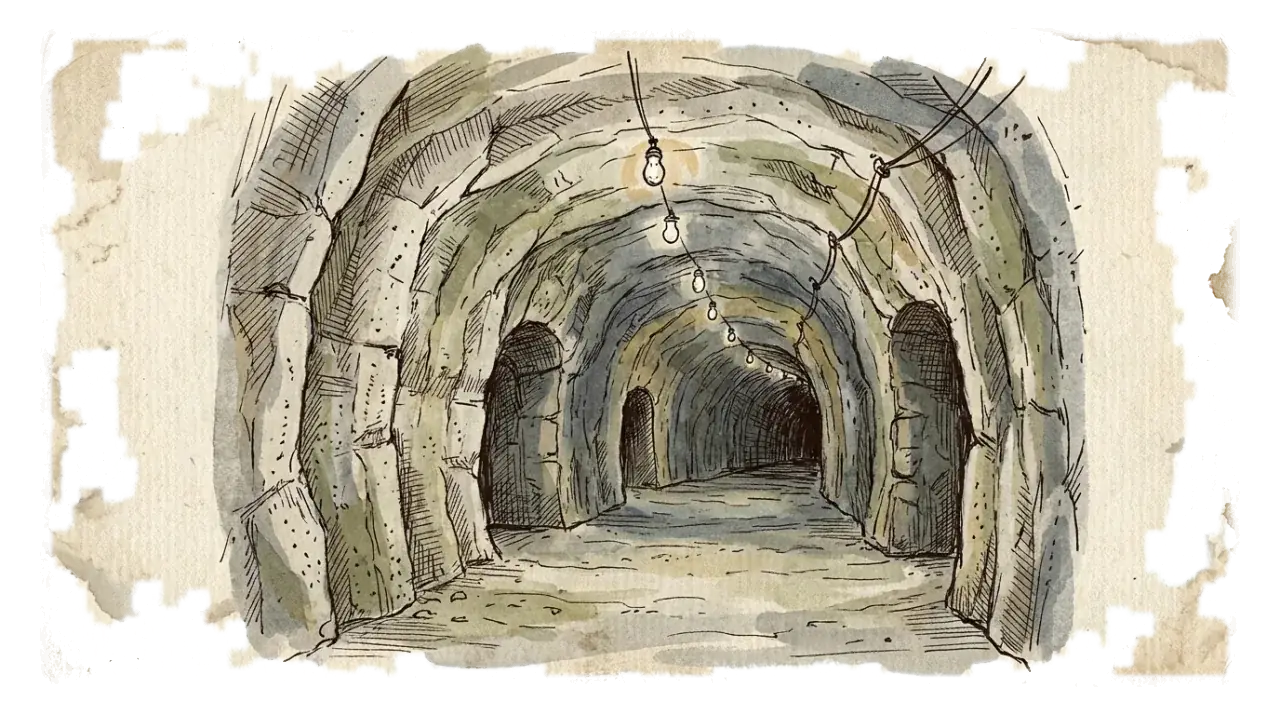
Ink line over watercolour wash, one hand, one paper, drawn for these walks and not bought in. A photograph of a dark tunnel shows nothing. A drawing can leave out the clutter. You meet them at the stops.
A companion for a walk.
Compass is published by the Department of the Environment and included in the reserve ticket. Here is what it does, and what it deliberately refuses to do.
It follows you, and you can always skip ahead
Stops appear as you reach them. But GPS drifts by tens of metres against these cliffs and dies completely in the tunnels, so every stop also has a button that says you are there, and the full list is always one tap away. The whole walk is completable with location permission refused.
Sixty to ninety seconds a stop
Long enough to be worth stopping for, short enough to keep walking. Then you put the phone away and look up. Every word is written out in full, and stays beside the narration.
Built for a rock with no signal on it.
Spanish day-trippers are the largest group of visitors here, and they lost EU roaming after Brexit. Cruise passengers often have nothing either. And limestone kills reception inside St Michael's Cave and both tunnel systems, which is precisely where the writing is worth having.
So the walk is built to run with nothing.
Scan the sign at the gate. A website opens. There is nothing to install and nothing to log in to.
Take the walk with you: 1 to 3 MB. Text, illustrations and map data, all of it, in seconds on the reserve's wifi. You do this once, and it starts the moment you tap Start.
Walk. The phone stops talking to anything. The tour makes no network calls at all for the next three hours. It works in St Michael's Cave and inside both tunnel systems, which is exactly where it matters. The build tests it.
What it refuses to do
No account, no email, no app. Nothing on any visitor screen asks for anything before it has given something, and location is requested at the second stop, in response to a tap, with the reason attached.